Bail hearings move fast externally, but the decision to release a person pretrial typically hinges on a mindful, layered analysis. When a judge weighs flight threat, the inquiry is easy theoretically: will certainly this person return to court if launched. In practice, the solution requires greater than a list. It asks for judgment informed by statutes, local criterion, human actions, and the truths of an accused's life. I have endured hearings where the very same fee created opposite outcomes, and both made good sense once you looked past the docket line to the human and step-by-step information underneath.
This item unboxes how courts think about flight threat, what evidence actually influences them, and where counsel can relocate the needle. It also mirrors how Bail Bonds fit into that image without overselling their duty. Money figures in, but it is hardly ever the just, or perhaps primary, driver.
The lawful frame: the concern courts have to answer
Most states echo the government criterion in some type: release is the default, and restrictions are added just as needed to fairly assure look and public security. Trip threat lives in the first fifty percent of that formula. Public safety, while vital, is a separate axis. A judge might find a person hazardous and reject release therefore alone, yet a flight-risk denial stems from a details anxiety that the person will not come back.
Statutes frequently note aspects judges should consider. The phrasing differs, however you typically see the very same core components:
- The nature and scenarios of the infraction, particularly if it involves physical violence or a possibility of lengthy incarceration. The weight of proof against the defendant. The accused's history and characteristics, including rap sheet, work, family members ties, neighborhood links, migration status, and prior failings to appear. The accused's document on guidance, consisting of probation or parole compliance.
That framework matters for two factors. First, it legitimizes the judge's query and guides the document for appellate review. Second, it creates foreseeable lanes for legal representatives to present truths that really count.
What "flight danger" really implies in a courtroom
People usage flight threat to describe 2 really different habits. One holds true absconding, the person who leaves the territory or goes underground to avoid prosecution. The other is the much more mundane, yet common, failing to appear caused by turmoil, neglect, or confusion. Juries compare them, and the solutions differ. A person who missed a court date since they moved homes and never ever obtained the notification can generally be handled with tips and conditions. An individual who crossed a state line after charge because they heard a co‑defendant was working together increases a various degree of concern.
Judges think probabilistically. They never ever have assurance, so they try to find indications and weigh just how much each one moves the needle. Fact patterns can press run the risk of up or down quick. I when enjoyed a magistrate give unsecured release to an accused dealing with a decade‑eligible fraud count after discovering she had actually been the main caregiver for a youngster with complicated medical requirements. The district attorney had a compelling situation, however the court believed that caregiver https://telegra.ph/Just-how-to-Discover-a-Trusted-Citizen-Bail-Bonds-Business-03-02 responsibility and a steady schedule secured the accused. In a different hearing, a low‑level medicine charge drew a substantial bond because the accused had 2 prior bench warrants within eighteen months and no verified address. The extent of the fee mattered much less than the recent background of blowing off court.
The gravity of the charge and the pull of the penalty
Severity is one of the most intuitive element. If sentence could bring a lengthy sentence, the accused has a stronger reward to run. Judges commonly look beyond legal optimums to realistic arrays under regional guidelines. A sixteen‑year optimum sounds huge, but if first‑offender standards point toward a couple of years, that context softens the reward to leave. District attorneys occasionally stretch the worst‑case scenario. Great courts press back and ask what an equivalent situation actually produced last term.
Evidence strength engages with fine. A strong situation plus a long potential sentence magnifies the danger, since the offender most likely views sentence as potential. A weak instance with the same statutory maximum is less harmful. Defense counsel can blunt danger by verbalizing the weaknesses: contradictory witness accounts, a reductions movement most likely to leave out crucial statements, lab results still pending. Judges do not try the situation at bond, but they do pay attention for reputable signs that the end result is uncertain.
Community connections, however with evidence not platitudes
Family and employment are not magic words. Juries want verification. A defense attorney that claims their client functions full‑time is less persuasive than one that has a letter on company letterhead, a supervisor's telephone number, and pay stubs. A claim of long-lasting residence is stronger with lease copies, energy expenses, or testimony from a property manager that is resting two benches back. Specifics matter. Names, addresses, timetables, pictures of the work ID card. When you can reveal the defendant's day-to-day live is rooted within the region or close by, the regarded logistical and social prices of getting away surge, which reduces flight risk.
Immigration condition is nuanced. Some territories over‑discount community connections when an offender is not a citizen, however judges aware of federal detainer practice will certainly separate threat of elimination by migration authorities from voluntary trip. Defense counsel must clarify whether any type of detainer exists and, otherwise, emphasize stable connections such as children in regional colleges or long‑standing employment. The lack of a key can be a meaningful reality, especially when coupled with evidence that the accused has never ever traveled internationally.
Prior failures to show up be worthy of context. Judges see the count and the recency. A fifteen‑year‑old FTA on a web traffic citation is various from two missed felony Arraignments in the in 2015. Defense counsel can refurbish an older failure by showing succeeding conformity on various other cases, or by explaining a particular, proven factor: a missed notification, hospitalization, a documented transport malfunction. Pattern, not perfection, drives the assessment.
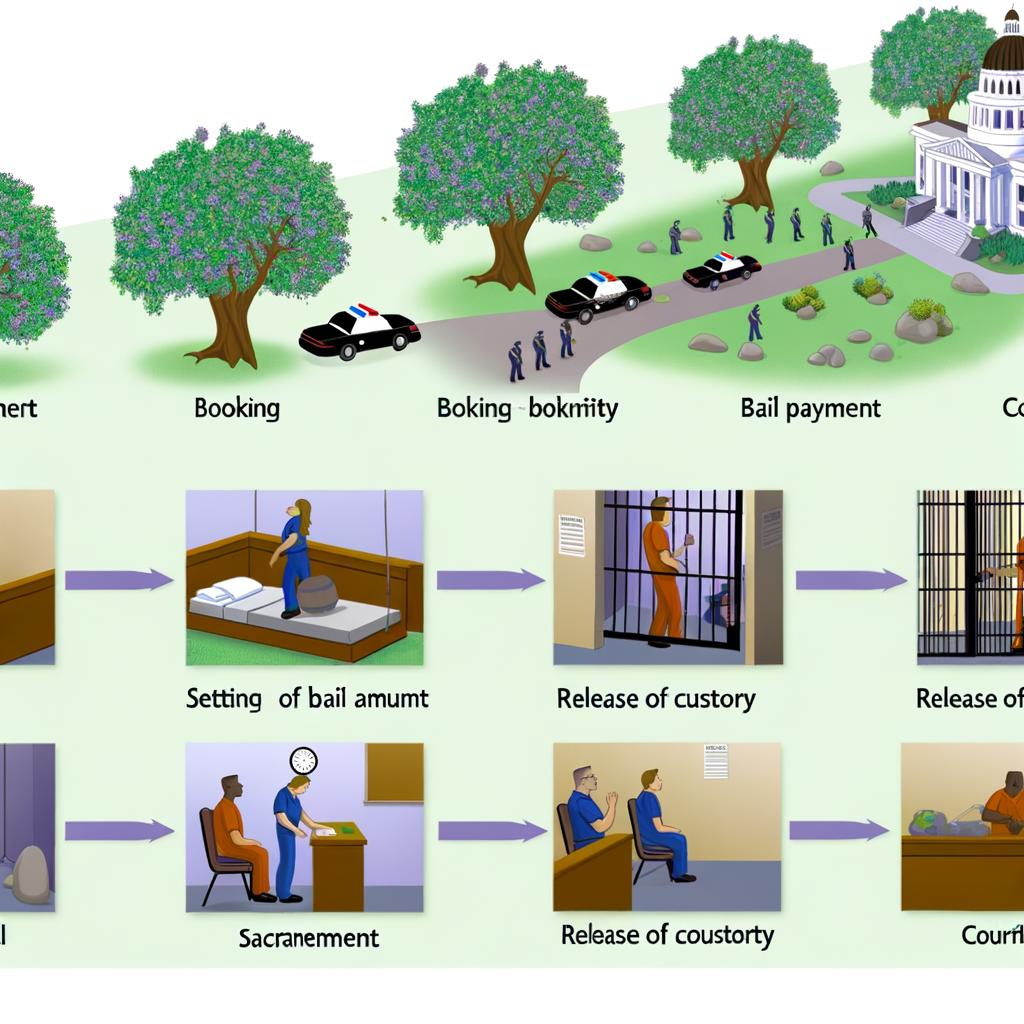
Money and the role of Bond Bonds
Financial conditions must be calibrated to run the risk of, not utilized to apprehend by default. Many jurisdictions now require courts to consider capacity to pay and to explain why a particular amount is necessary to protect appearance. That is not lip service. Appellate courts have turned around bail orders that properly incarcerated indigent accuseds without the statutory findings for preventative detention.
Bail Bonds business, in territories that use them, function as personal guarantors. A guaranty bond allows an offender to pay a portion of the overall quantity, usually 10 percent, in exchange for the bail bondsman's assurance. Judges recognize the technicians. What they respect is the sensible impact: does the monetary stake plus the bondsman's supervision decrease the danger of nonappearance. The solution varies. Some bondsmen actively keep track of clients, send pointers, and coordinate transport to court. Others do bit past creating the bond. Where a bondsman offers a clear guidance strategy and can point to a performance history in the courthouse, courts often deal with the guaranty as a supporting factor.
Defense advise need to not treat cash as the only lever. If the court believes the core danger stems from disorderly life circumstances or energetic avoidance, a high number without helpful framework resembles an attempt to paper over the issue. Much better to suggest a bundle: a moderate safe bond, third‑party custodianship by a relative, and once a week check‑ins. If a Bail Bonds representative is involved, advise ought to prepare to describe specifically what the agent will certainly do to help ensure attendance.
Technology, conditions, and real‑world frictions
Conditions offer 2 functions in flight‑risk management: they raise the price of getting away and they minimize the odds that minor disturbances turn into missed out on court. General practitioner tracking, traveling limitations, and passport abandonment raise the obstacle to making off. On the softer side, tip systems and normal pretrial supervision keep the situation in the defendant's regular rhythm.
Judges know that general practitioner is not a silver bullet. People can cut bracelets, and surveillance ability differs by region. Yet GPS can get convenience where the court needs an acting protect, specifically in cases with out‑of‑state connections. Travel constraints, such as constraining motion to the judicial district, prevail. Ticket abandonment is significant only if the individual has a key, so defense attorney should be ready to confirm that detail.
Even easy logistics matter. Dependable transportation reduces failures to show up. When a court hears that the defendant survives a bus line that runs occasionally, and court is set for 8:30 a.m., they may build in slack by calling for the defendant to get here early, check in with pretrial solutions, and even timetable in the late early morning. Those lodgings take place more frequently than people believe, specifically for low‑level fees where the system gain from compliance as opposed to incarceration.
The quiet weight of courtroom reputation
Judges run in a community. District attorneys, defense lawyers, and pretrial policemans construct track records for being precise concerning truths on the margins. A lawyer who oversells connections or escapes straight concerns concerning a previous FTA will certainly battle to win close telephone calls later on. On the various other hand, a public defender who candidly admits the vulnerable points and suggests sensible conditions commonly makes reputation that repays when it matters.
Defendants, as well, bring reputational signals. If a person has formerly shown up voluntarily after being alerted of an indictment, that carries genuine weight. I have seen courts soften conditions when they hear that the accused self‑surrendered without event, also when the cost was serious. By contrast, a recent volunteer departure from the territory after discovering of a pending investigation activates suspicion that the person will duplicate the behavior.
The human equation: rewards and anchors
Flight threat has to do with rewards and supports. Incentives consist of the possibility of sentence and the intensity of penalty. Supports include family, work, healthcare, college, real estate, and community participation. When supports surpass and surpass motivations, the court leans toward release with light conditions. When incentives loom large and supports are weak, problems tighten up, or release ends up being unlikely.
Concrete examples help:
- A mid‑level supervisor charged with embezzlement carries a trustworthy threat of a multi‑year sentence if founded guilty. Evidence includes bank records and a working together witness. Supports are strong: 2 children in local schools, a mortgage, and the offender has remained employed. With those truths, a court may enforce a safeguarded bond at a workable level, ticket abandonment, no worldwide travel, and normal check‑ins. Because the supports are strong and the person self‑surrendered, a Bail Bonds warranty, if utilized, would likely be modest. A 22‑year‑old with a prior bench warrant on a misdemeanor burglary now encounters a felony theft. The proof hinges on an unrealized fingerprint and a next-door neighbor's vague description. The offender rests at various buddies' houses, has no secure job, and just recently missed a pretrial meeting on another situation. Right here, the motivation to flee is moderate, but the anchors are weak. A judge could buy GPS, once a week pretrial supervision, and a higher safeguarded bond, potentially calling for a guaranty with a bondsman that accepts active suggestions. Problems aim to produce man-made anchors where natural ones are lacking. A noncitizen accused with deep origins, no passport, a U visa application pending, and a clean history of looks deals with a medication property cost. The lawful risk is not unimportant, however removal issues are speculative, and supports are solid. A judge might approve launch on recognizance with modest conditions, despite the migration backdrop, because historic actions signals reliability.
Evidence that relocates judges
Lawyers commonly undervalue the impact of tiny, verifiable information. A couple of products consistently shift a judge's confidence:
- Documentation of employment with contact details for a supervisor willing to verify hours and responsibilities. Proof of stable real estate, consisting of a lease, an authorized letter from a property owner, or energy expenses in the accused's name. Medical documents that describe caregiving functions or therapy routines that connect the accused to regional providers. Travel records, or the lack thereof, consisting of specific verification that the defendant has no passport or has actually surrendered it to counsel. A simple calendar mapping court dates against the offender's job shifts, combined with a letter from the company acknowledging the demand for time off.
Those pieces tell a story the judge can think. They likewise aid pretrial solutions craft realistic check‑in routines and aid the staff's workplace set dates that minimize the threat of inescapable conflicts.
The district attorney's lens
Prosecutors concentrate on patterns and take advantage of factors. They highlight current FTAs, out‑of‑state ties, cash money accessible at arrest, and declarations recommending intent to leave. They often use to accept lower financial problems for more stringent non‑monetary ones, such as general practitioner or time limits. This can be critical: a high number looks vindictive and risks reversal, while targeted conditions make it through far better on appeal.
Good district attorneys stay clear of overemphasizing their hand. If their case relies on unstable identification, they run the risk of reliability by assuring a near‑certain conviction to pump up the viewed motivation to run away. A candid assessment, paired with significant worries concerning logistics or prior disagreement, resonates extra with judges and often generates a resilient order.
The protection course: build the document before you argue
Bail hearings hardly ever reward improvisation. Defense attorney need to put together the record early. That consists of validating addresses, gathering work files, aligning third‑party custodians, and preparing the offender to speak briefly, if in all. Judges see accuseds while attorneys suggest. Made up, respectful habits assists. Rambling explanations or damaging the lawyer's presentation hurts.
A useful method that often functions is to recommend tiered conditions: acknowledge that the court has to take care of danger, then reveal why lighter actions will "sensibly ensure" appearance. "Fairly" is the word the regulation utilizes. Perfection is not the requirement. When advice frames the ask around reasonable guarantee, backed by evidence, courts hear positioning with the statute as opposed to an appeal for special treatment.
The function of pretrial services
Pretrial services police officers are the court's eyes and ears. Their records bring genuine weight due to the fact that they are regarded as neutral. They validate history information, assess risk making use of validated devices, and advise conditions. A report that classifies somebody as reduced danger and suggests release without monetary conditions frequently supports the judge's decision. Defense counsel should engage with pretrial very early, guarantee the offender is reachable, and deal with any kind of errors swiftly. If a record consists of inaccuracies, requesting for a quick continuance to send documentation is better than forcing the court to pick with a problematic record.
Risk analysis tools are helpful, yet not destiny. Juries differ the tool's suggestion when case‑specific facts warrant it. They are likewise sharp to reviews of algorithmic predisposition and over‑reliance on previous apprehensions. Concrete, customized info still wins the day.
Regional differences and neighborhood custom
Flight danger evaluation lives within local customized. Some counties prefer non‑monetary conditions and keep money bonds uncommon. Others lean on safeguarded quantities with the assumption that a household will collaborate with a Bonds representative. The same defendant can get extremely different therapy throughout jurisdictions, not because the regulation is different, but because society is.
Lawyers who practice on a regular basis in a court house discover what relocates specific courts. One court might trust GPS to handle almost any trip threat unless the accused is billed with a significant fierce violation. One more might prioritize third‑party custodianship and a proven house over technology. These are not wild swings, however purposeful variants that shape results at the margins.
When courts deny launch on flight‑risk grounds
Denial happens, though much less often than laypeople presume. When a court locates that no problem will sensibly assure look, the order ought to hinge on details realities: a history of absconding for extended periods, active efforts to avert arrest, showed accessibility to significant funds and worldwide ties, or a legitimate strategy to flee. I have actually seen rejections stick where the accused acquired a one‑way ticket abroad after indictment, or where a co‑defendant with close ties disappeared and the staying accused had identical sources and plans.
Defense advice facing a rejection should concentrate on adjustment gradually. New housing, confirmed employment, a given up passport, or a third‑party custodian can warrant taking another look at the order. Courts are extra going to reevaluate when the offender demonstrates continual conformity with prison regulations, finishes a program, or reveals tidy disciplinary records. Judges seek brand-new anchors and reduced rewards, not recycled arguments.
How Bail Bonds match a well balanced package
In territories that allow them, Bail Bonds can shut the gap between what an accused can publish and what a court assumes is essential to protect appearance. A thoughtful bundle pairs an affordable bond with non‑financial conditions. For instance, a $25,000 surety bond, once a week reporting, and take a trip limits might really feel to the court like adequate friction to hinder trip without jailing the individual pretrial. Bondsmen that team up with pretrial solutions and supply presence suggestions develop credibility. Courts make note when a bondsman appears in court to vouch for an accused and to outline how they will certainly make sure participation. That individual touch, while not called for, signals shared responsibility.
Families must ask bondsmen direct inquiries: whether they supply tips, what occurs if a court day changes last minute, and exactly how they coordinate with counsel. Not all firms operate the same way. A firm that deals with the connection as transactional provides less reassurance to the court than one that runs as a real guaranty partner.
Practical steps that in fact help
A few actions regularly boost the probabilities of a positive flight‑risk decision:
- Gather hard proof of ties: leases, energy costs, pay stubs, institution enrollment letters, clinical consultation logs, and letters from area leaders happy to attest to the accused's presence and reliability. Lock down logistics: verify transportation prepare for court dates, recognize backup drivers, set phone suggestions, and acquire written employer flexibility for early morning appearances. Eliminate easy opportunities for trip: give up any kind of ticket voluntarily to counsel, close out short‑term travel plans, and record that action in composing for the court.
Each step transforms abstract assurances into functional safeguards. Judges compensate that persistance with tailored, convenient conditions.
The silent art of right‑sizing conditions
Over conditioning launch can backfire. Excessive demands produce failing factors and turn workable threat right into unneeded offenses. Courts recognize this, and good ones calibrate. If an offender has no history important misuse, mandatory treatment will not raise court attendance. If a person has a rigid job timetable, twice‑weekly in‑person check‑ins may be disadvantageous when a regular phone check‑in would certainly be sufficient. Defense attorney should help the court right‑size by discussing genuinely what the offender can keep while abiding fully.
On the other side, under‑conditioning develops risk of genuine absconding. When the situation lugs solid motivations to flee and the anchors are weak, absent problems like GPS or a safeguarded bond, people often disappear. Judges do not such as providing bench warrants and burning docket time to track avoidable failures. They will err on the side of a bit extra structure if counsel can not show how attendance will certainly be dependably achieved.
An honest note on human behavior
People turn up for court when three points align. They believe they will certainly be treated relatively, they see a course with the process, and they have the methods to arrive. Justness perception is not just a moral concept; it is a behavioral chauffeur. If a defendant assumes the deck is piled, the lure to avoid increases. Advice can alleviate this by describing the procedure clearly, setting assumptions, and showing that involvement brings tangible benefits, like positive appeal conversations or credit scores for program conclusion. Way to get there is literal: day care, bus fare, pause job. Juries react well to propositions that fix those functional problems.
Final idea: reliability, not rhetoric
Flight threat is not an ornate issue. It is a reality pattern, a prediction, and a plan. Judges react ideal to qualified information, provided with humbleness and backed by documents or statement. The appropriate mix of supports and safeguards can secure release even in serious cases. Conversely, the wrong mix can sink a minor situation right into unneeded apprehension. Attorneys who deal with the hearing as an issue in functional threat monitoring, rather than a phase for broad speeches, boost outcomes for their customers and the courts.
Bail decisions will never be best. They do not require to be. The law requests affordable guarantee, which common acknowledges both the limitations of prediction and the worth of organized depend on. Construct the supports, cut the rewards, tighten up the edges where you must, and offer a plan the judge can defend on the document. When all of that comes together, trip threat ends up being manageable, and people can battle their cases while maintaining their work, their family members, and their footing in the community.
ABBA Bail Bonds 900 Avila St STE 101 Los Angeles, CA 90012 (213) 296-0901 https://abbabailbonds.com